




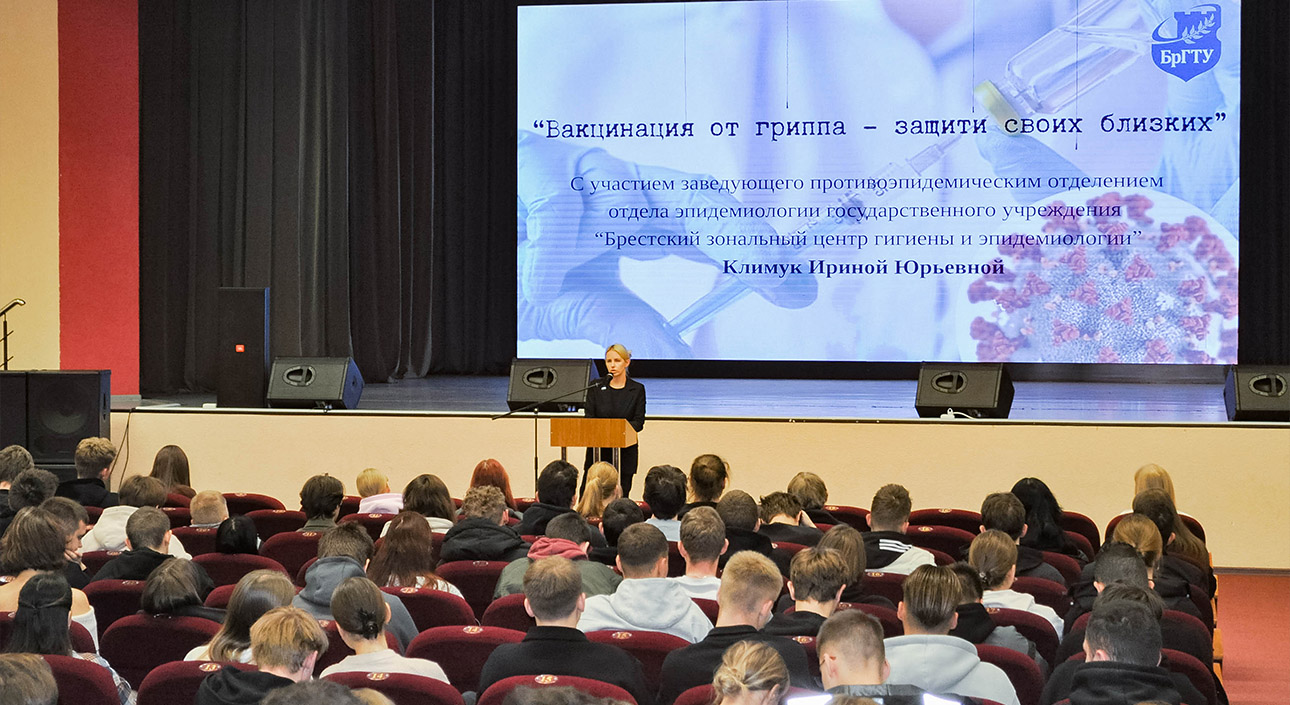
As part of an educational campaign on the prevention of seasonal diseases, Brest State Technical University hosted a meeting between students and staff and Irina Yuryevna Klimuk, Head of the Anti-epidemic Department of the Epidemiology Department of the Brest Zonal Center for Hygiene and Epidemiology.
The main topic of discussion was flu vaccination—a relevant and vital measure during the autumn-winter peak in cases.
"When most people are vaccinated, it becomes more difficult for the virus to spread. This is especially important for protecting the elderly, children, and those who cannot be vaccinated for medical reasons," the doctor noted.
According to the epidemiologist, annual vaccination helps the body prepare for current virus strains. The doctor explained that the World Health Organization updates its vaccine recommendations annually to ensure they reflect the most likely virus variants. She explained how immunity develops, why the flu virus is constantly changing, and how this affects vaccine composition.
Particular attention was paid to myths: "Vaccines cause illness," "It's better to get sick than to get vaccinated"—all of these assertions were examined and debunked.
